Is Your Cat Drinking
Enough Water? The Answer
Will Surprise You.
Your cat probably looks fine. They're eating, they're moving, they're doing the thing where they sit on your laptop at the exact moment you need it most.
This isn't a scare piece. It's a practical one. Cats have a genuinely unusual relationship with water — one rooted in their biology — and once you understand it, the fixes become obvious. Here's everything you need to know, and exactly what to do about it.
Cats evolved as desert animals. Their wild ancestors got almost all their moisture from prey — raw meat is roughly 70% water. As a result, cats never developed a strong thirst drive.
🚨 Signs Your Cat May Be Dehydrated
These are easy to miss — check each one honestly:
💧 How Much Water Does Your Cat Actually Need?
A 4kg cat needs roughly 160–240ml daily — from all sources combined.
A 4kg cat on dry food alone gets almost zero moisture from their food. A 4kg cat eating wet food twice a day gets 60–80ml from meals — nearly half their daily requirement, without touching the water bowl once.
A still water bowl is the least effective hydration source for a cat — not because it doesn't work, but because cats are instinctively suspicious of still water. In the wild, still water is often stagnant and unsafe. Moving water is fresh water.
💧 5 Ways to Fix Cat Dehydration — Starting Today
- Whiskas Kitten Wet Food — hydration built into every meal for young cats
- Whiskas Adult Wet Food — the simplest hydration upgrade for adult cats
- 2-in-1 Food & Water Dispenser — fresh water available all day, automatically
- Seafood Bone Broth Topper — pour it over dry food and watch them drink more
- Ultra Silent Water Fountain — the long-term solution cats actually prefer
Start Them Hydrated From Day One 🐱
The hydration habits your kitten develops in their first year stay with them for life. Starting with wet food is one of the easiest ways to support their hydration.
A tuna-in-jelly wet food packed with hydration, real fish goodness, and balanced nutrition for growing kittens. Every pouch delivers moisture your kitten would never get from a dry food bowl.
See on Amazon 🐱The jelly format is particularly effective for hydration because the moisture is distributed throughout the food rather than sitting in a separate liquid. Kittens who are hesitant about water bowls absorb hydration through every bite without any effort on their part — or yours.
If your kitten is on dry food, don't switch overnight — mix a small amount of wet food in with their kibble for the first week. Gradual transitions avoid digestive upset and help them accept the new texture.
The Simplest Hydration Upgrade You Can Make 🍗
Rich chicken-in-gravy wet food for adult cats, packed with hydration and balanced daily nutrition. The gravy format delivers moisture in a way cats find irresistible.
See on Amazon 🍗Gravy-format wet food has a specific advantage over jelly: the liquid is looser, more abundant, and cats tend to lap it up first — which means hydration happens immediately, before they've even started on the solid food. For a cat who ignores their water bowl entirely, the gravy in this pouch is often the most water they'll consume in a single sitting.
The chicken flavour has broad appeal — even picky cats who reject new foods tend to accept gravy-format wet food readily, because the smell and texture are closer to what their instincts recognise as real food.
Fresh Water Available Always — Without Thinking About It 💧
The water bowl problem isn't just that cats prefer moving water. It's also that most of us forget to refill it — or refill it with water that's been sitting for hours. This solves both.
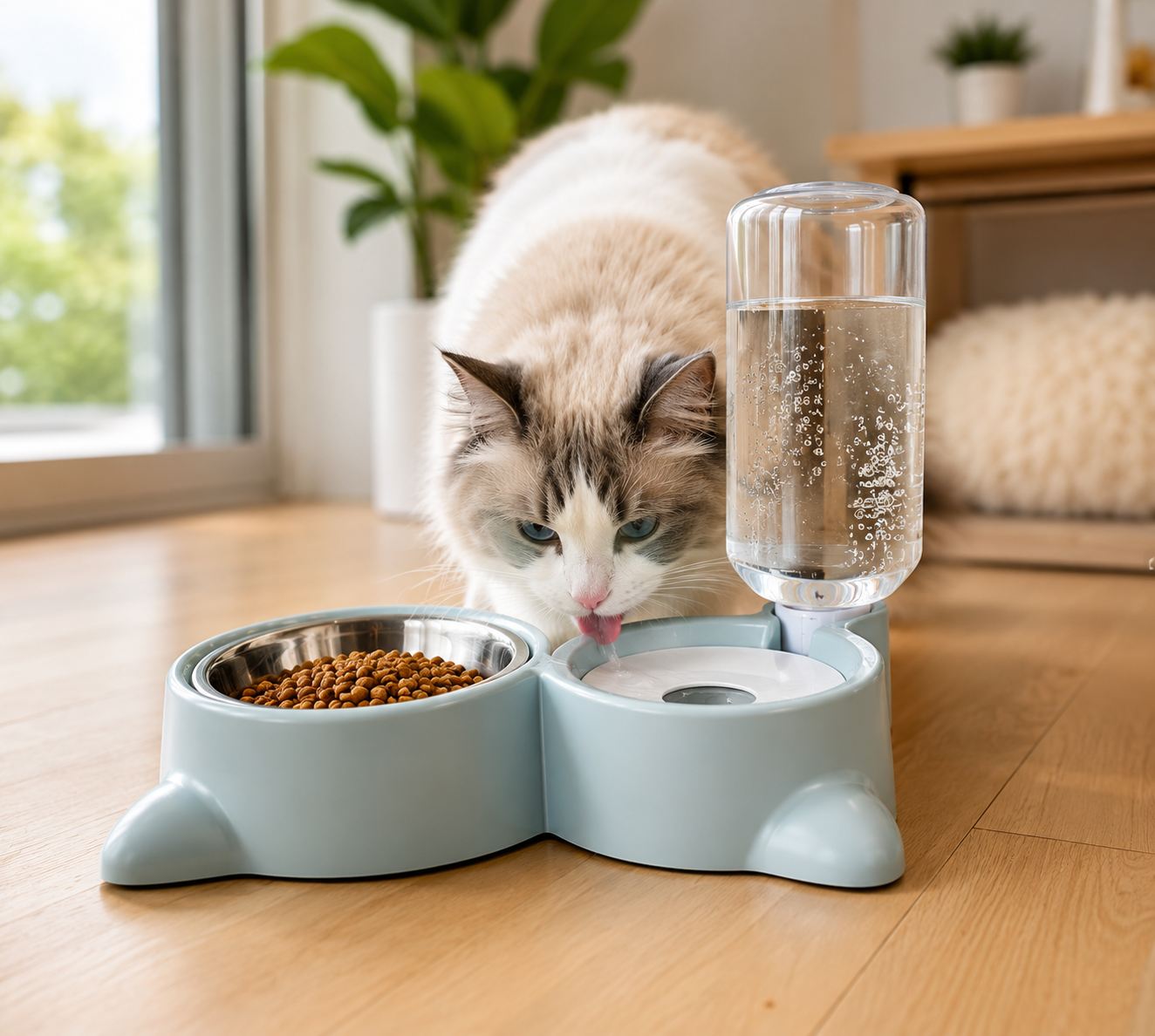
A smart 2-in-1 feeding station with automatic water dispenser and stainless steel food bowl. Fresh water refills automatically throughout the day — your cat always has access without you having to remember.
See on Amazon 💧Most cat owners refill the water bowl once a day — in the morning, when they remember. By evening that water has been sitting for 8–12 hours, collecting dust, losing the slight chill that makes it appealing, and potentially picking up bacteria. And then we wonder why they aren't drinking.
An automatic dispenser gravity-feeds fresh water from a reservoir throughout the day, which means the bowl level stays consistent and the water is always relatively fresh. This combination addresses three separate hydration barriers in one purchase.
Place the water station away from the food bowl if possible — cats instinctively avoid water that's near their food source (in the wild, prey contaminated nearby water).
The Trick That Makes Dry Food Hydrating 🐟
Your cat loves their dry kibble and won't switch. That's fine.
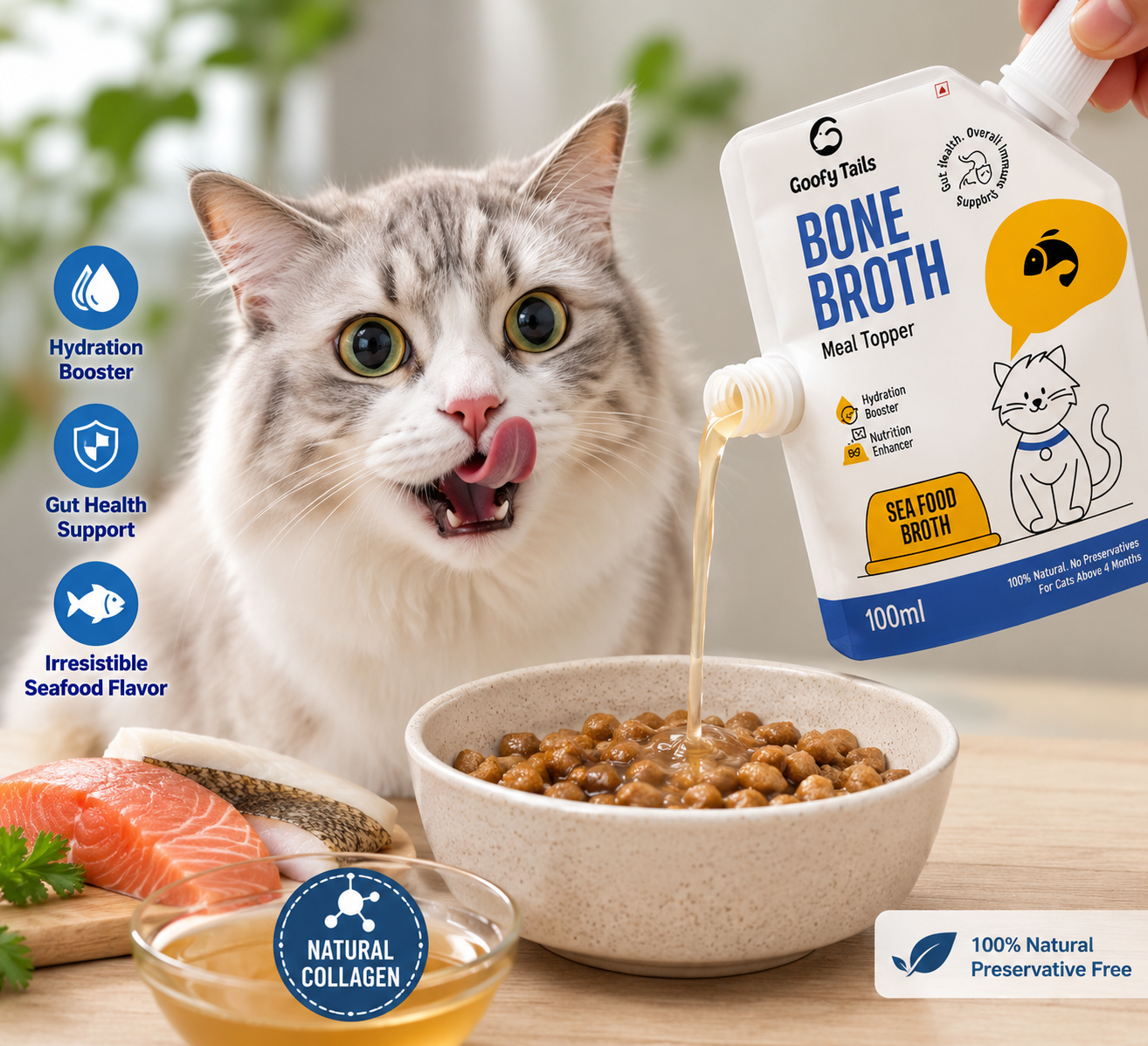
A nourishing seafood bone broth topper packed with hydration, natural collagen, and rich savory flavour. Pour over dry food to instantly boost moisture intake and palatability.
See on Amazon 🐟A food topper is the perfect solution for the cat who is deeply, non-negotiably committed to their dry kibble and treats any attempt at change as a personal attack. You don't change the food. You change what goes on top of it. A seafood broth poured over dry kibble softens it slightly, releases the fat-soluble aromas cats find irresistible, and adds meaningful moisture content to every bite.
The bone broth adds flavour and extra moisture.
The Fountain for Picky Drinkers 💦
Moving water is what cats were designed to drink — and this delivers it continuously, all day.
A 2.5 L running-water fountain with ergonomic drinking options designed to encourage picky cats to drink, a filter that softens water and removes debris, and LED status alerts with auto-shutdown.
See on Amazon 💦Many cats drink more from moving water than from a still bowl. For a cat who chronically under-drinks, a fountain can help some cats drink more without any other changes to their diet or routine.
The ergonomic drinking options are designed to tempt picky cats to drink, and the LED status alerts and auto-shutdown tell you when the fountain needs attention.
The filter softens the water and removes debris between cleaning cycles.
Introduce the fountain near where your cat's current water bowl sits. Don't move it immediately — let them discover it in familiar territory. Once they're drinking from it regularly (usually within a week), you can relocate it to where you want it permanently.
💧 The Short Version
The fix is straightforward: get moisture into their diet through wet food, supplement with broth if they're committed to dry food, and replace the still water bowl with a fountain. You don't need to do all five things at once — start with whichever fix matches your cat's current situation and build from there.
Your cat can't ask for water. But they've been trying to tell you, in every way available to them, that they need more of it. Now you know how to listen.
This article is general information, not veterinary advice. If you're worried about your pet's health, talk to your vet.
🐱 Browse All Cat Finds
Every product we feature for cats passes Luna's impossibly high standards. Handpicked for Indian cats, Indian climates, and Indian pet parents.
See All Cat Picks